また、Global Burden of Disease(GBD)2021の解析では、1990年から2021年にかけてTTHの全世界的な有病者数が38%増加しており、東アジア地域では特に増加傾向(EAPC +0.46)が顕著です[2]。現代的なライフスタイル(長時間のデジタル機器使用・身体活動の低下)との関連が示唆されています。
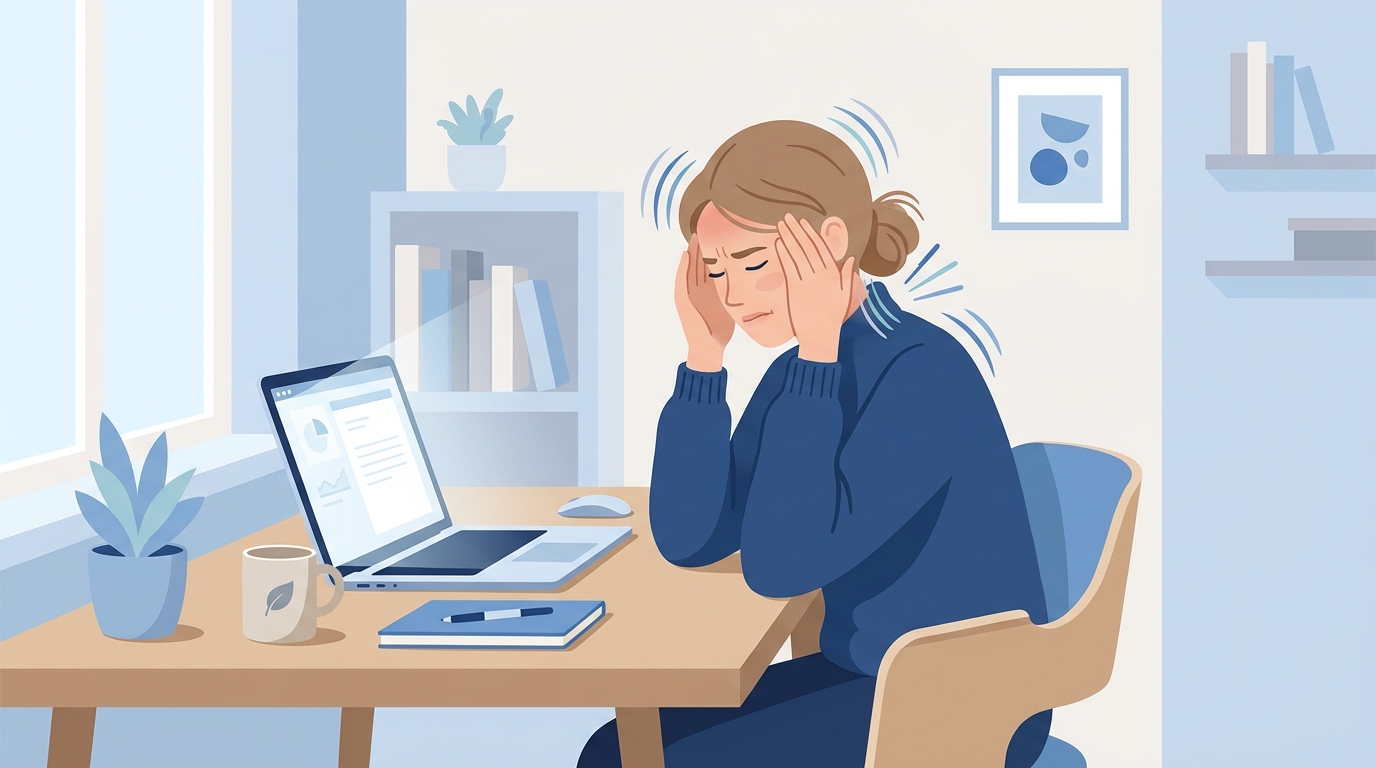
スマートフォンやPCを長時間使うことで生じる「前頭位姿勢(forward head posture:FHP)」は、頭部が肩より前に出ることで首・肩の筋肉に慢性的な過負荷をかける姿勢です。前頭位姿勢が続くと、頸椎に過度な負担をかけることとなります。これが筋膜トリガーポイントの形成と緊張型頭痛の発症・維持に深く関与しているとされています[3]。
Lu Z, Zou H, Zhao P, Wang J, Wang R(2024)「Myofascial Release for the Treatment of Tension-Type, Cervicogenic Headache or Migraine: A Systematic Review and Meta-Analysis」Pain Research and Management 2024:2042069. PMC10999287 ― 本記事での引用箇所:筋膜リリースによるTTH疼痛軽減効果(SMD = −0.86)の根拠
Liu C, Wang Y, Liu M et al.(2025)「Global, regional, and national burden and trends of tension-type headache among adolescents and young adults (15–39 years) from 1990 to 2021: findings from the Global Burden of Disease study 2021」Scientific Reports 15:18254. Scientific Reports ― 本記事での引用箇所:TTHの生涯有病率(46〜78%)・世界有病者数が38%増加・東アジア地域のEAPC +0.46の根拠
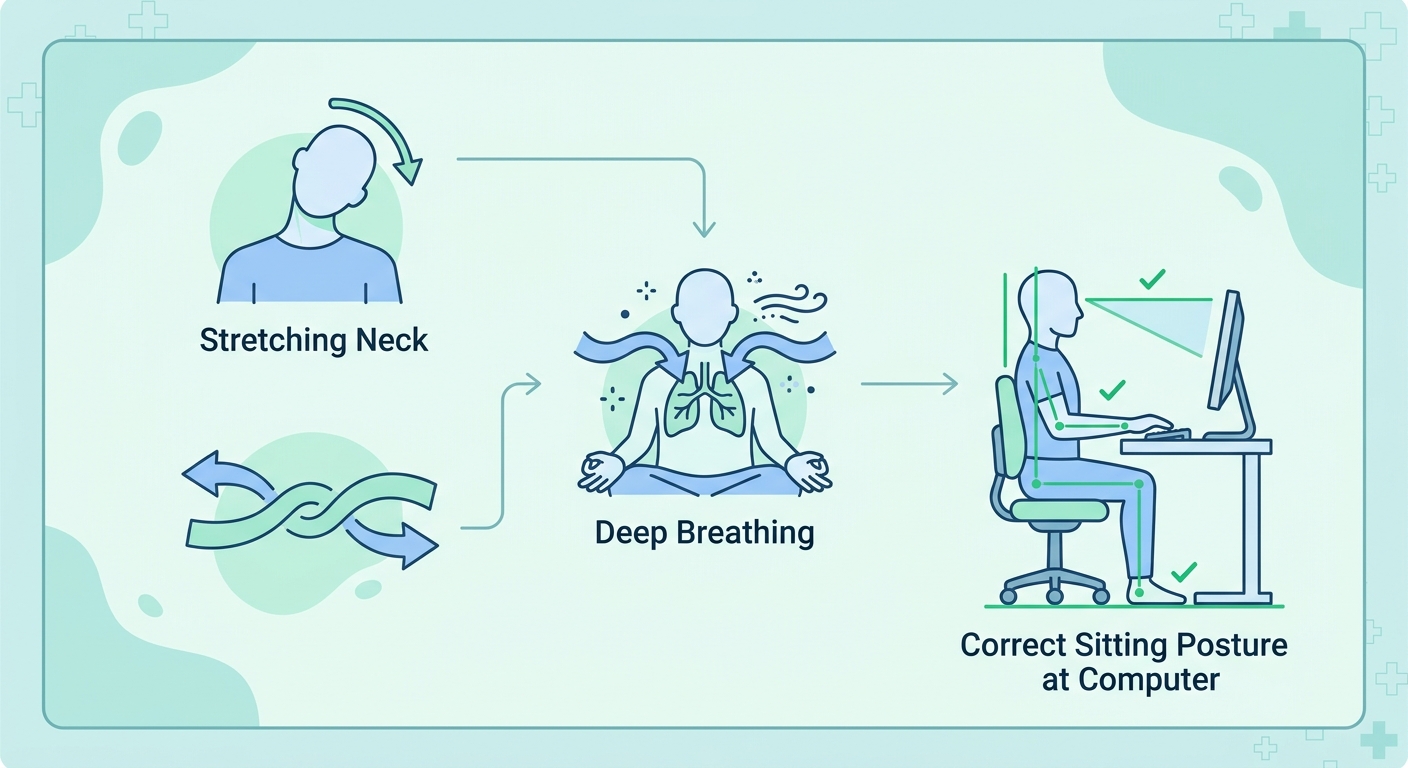
Cefalì A, Santini D, Lopez G et al.(2025)「Effects of Breathing Exercises on Neck Pain Management: A Systematic Review with Meta-Analysis」Journal of Clinical Medicine 14(3):709. PMC11818914 ― 本記事での引用箇所:呼吸エクササイズの頸部痛軽減効果・横隔膜呼吸の有用性
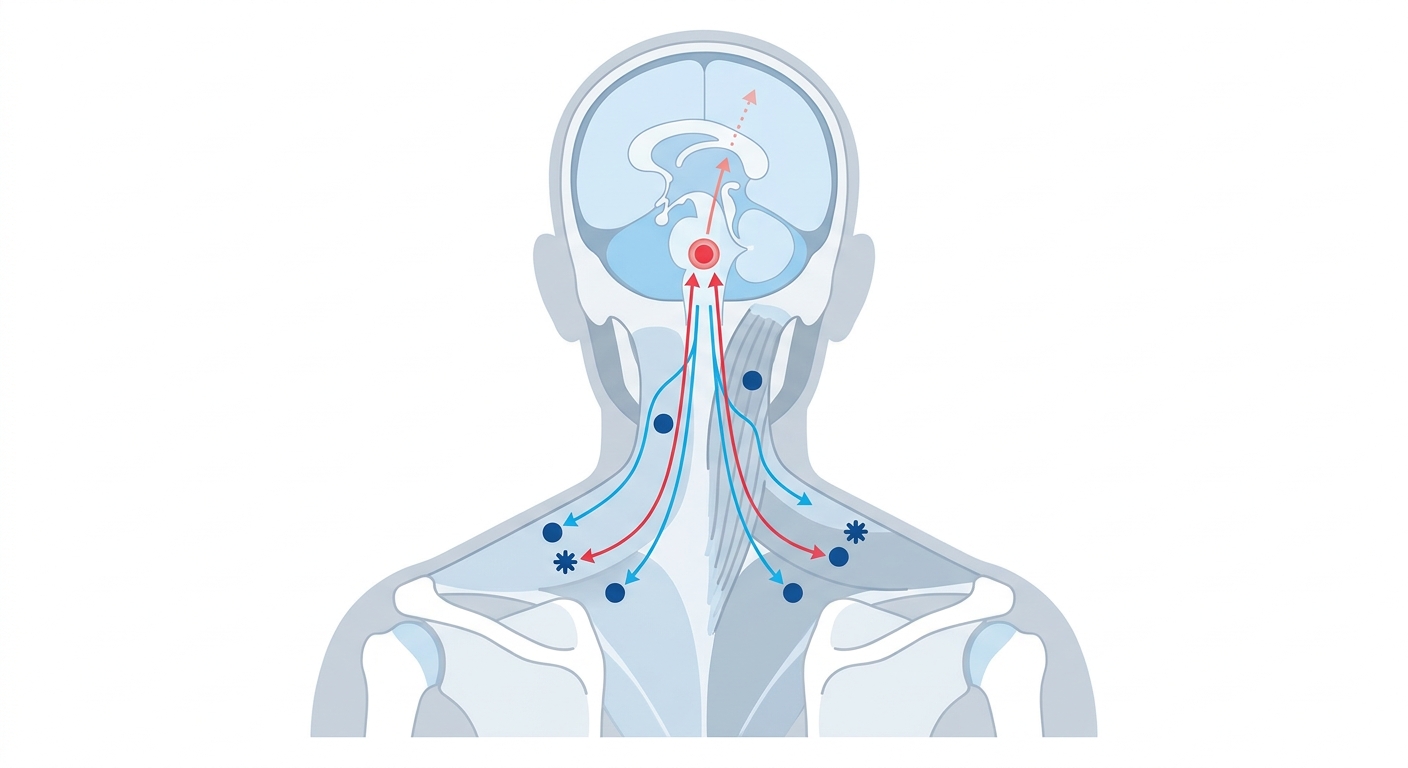
Bendtsen L, Schoenen J(2005)「Synthesis of Tension-Type Headache Mechanisms」in Olesen et al. (eds.) The Headaches (3rd ed.) Lippincott Williams & Wilkins. IHS (PDF) ― 本記事での引用箇所:TTHの末梢(筋膜トリガーポイント)・中枢感作両者の関与という多因子性機序の根拠
Usen A, Demiroz Gunduz M(2025)「Cervicogenic headache in forward head posture: frequency and associated factors in a cross-sectional study」Journal of Oral & Facial Pain and Headache 39(3):191-199. PMC12520431 ― 本記事での引用箇所:前頭位姿勢を有する人において頸原性頭痛の頻度が有意に高く、頭蓋椎間角(CVA)が小さいほど頭痛の重症度が高い傾向(FHP と頭痛重症度の関連)の根拠