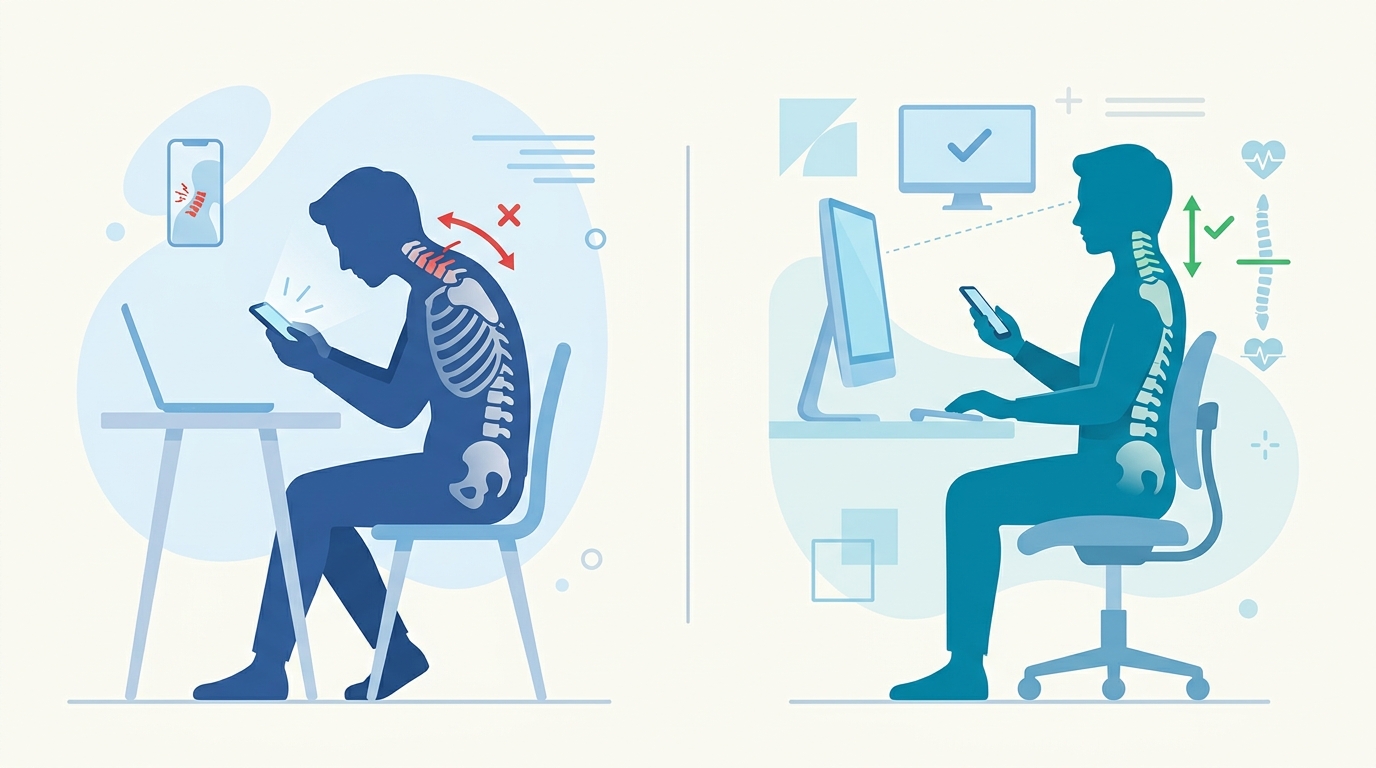
Eitivipart AC, Viriyarojanakul S, Redhead L(2018年)「Musculoskeletal disorder and pain associated with smartphone use: A systematic review of biomechanical evidence」Hong Kong Physiother J. 38(2):77-90. PubMed PMID: 30930581 ― 本記事での引用箇所:スマートフォン使用中に上部僧帽筋・頸部伸筋群の筋活動量が増大し、頭部前傾が生じるという生体力学的知見の根拠
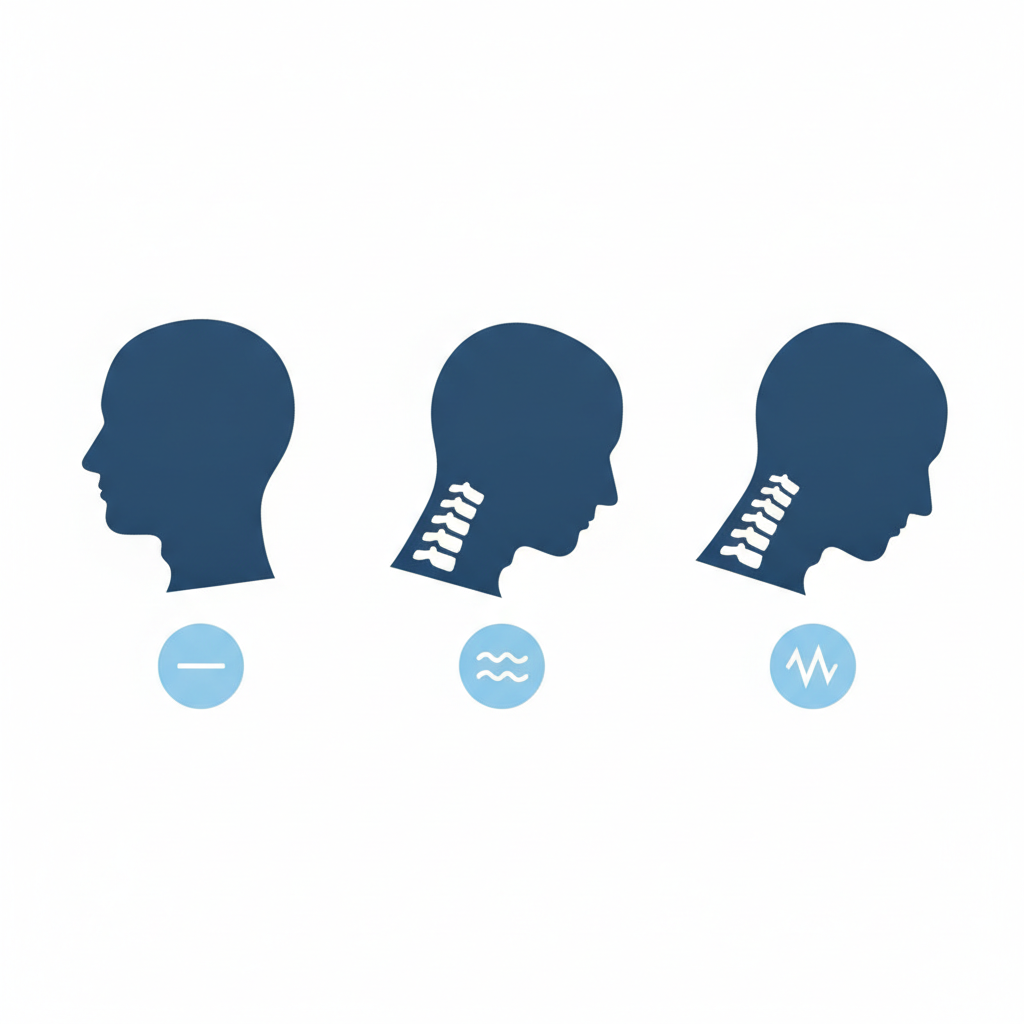
Tapanya W, Puntumetakul R, Swangnetr Neubert M, Boucaut R(2021年)「Influence of neck flexion angle on gravitational moment and neck muscle activity when using a smartphone while standing」Ergonomics. 64(7):900-911. PubMed PMID: 33428546 ― 本記事での引用箇所:頸部屈曲角度が増大するほど頸椎への重力モーメントが有意に上昇するという知見(図2の根拠)
Sirajudeen MS et al.(2022年)「Prevalence of text neck posture, smartphone addiction, and its association with neck disorders among university students in the Kingdom of Saudi Arabia during the COVID-19 pandemic」PeerJ. 10:e14443. PubMed PMID: 36540801 ― 本記事での引用箇所:スマートフォン過剰使用層でのテキストネック姿勢と頸部症状の関連(12ヶ月有病率46%)
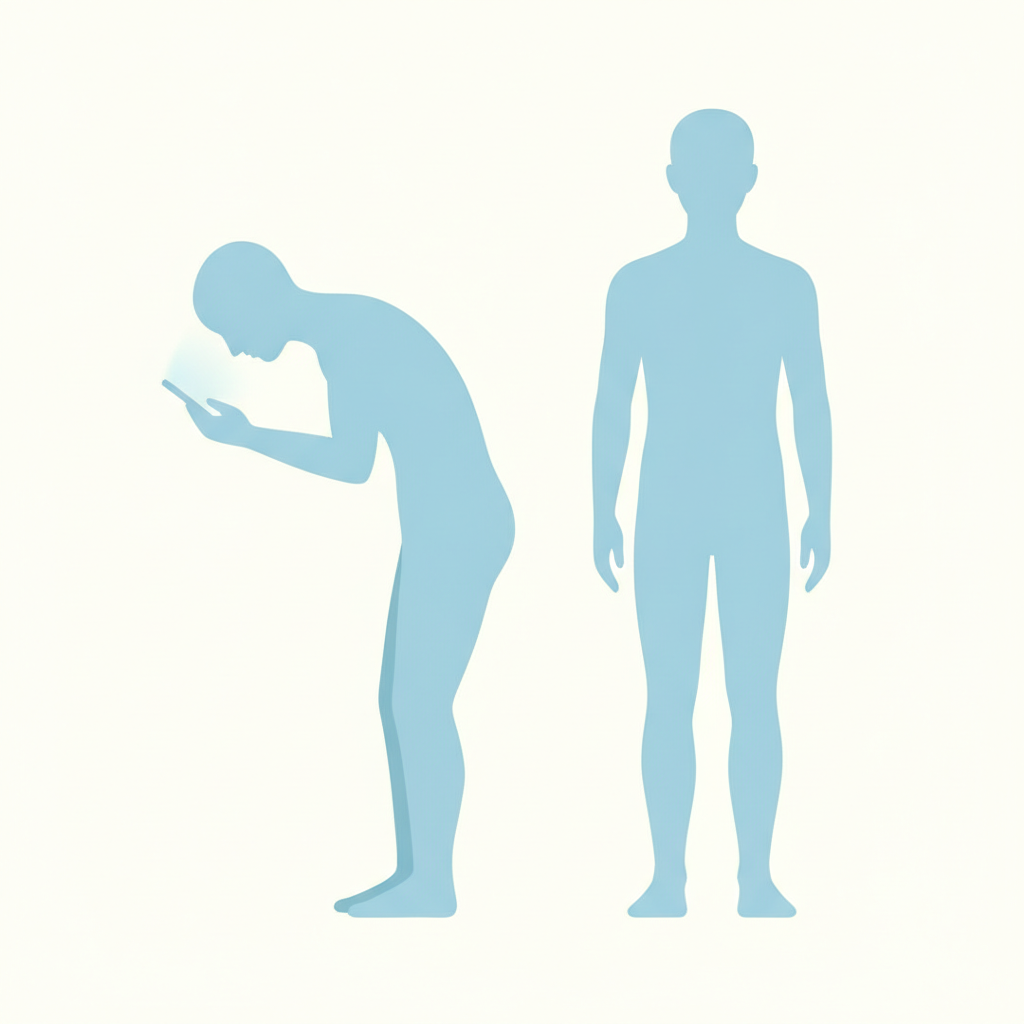
Grasser T, Borges Dario A, Parreira PCS et al.(2023年)「Defining text neck: a scoping review」Eur Spine J. 32(10):3463-3484. PubMed PMID: 37405530 ― 本記事での引用箇所:テキストネックの定義要素(姿勢92.7%・過剰使用63.4%)と「テキストネックと頸部痛の直接的因果関係は科学的に未確立」という指摘
Piruta J, Kułak W(2025年)「Physiotherapy in Text Neck Syndrome: A Scoping Review of Current Evidence and Future Directions」J Clin Med. 14(4):1386. PubMed PMID: 40004916 ― 本記事での引用箇所:テキストネック症候群に対する理学療法的介入(姿勢矯正・ストレッチ等)が症状軽減・姿勢改善・頸椎可動域向上に貢献する可能性が示されたというエビデンスの根拠