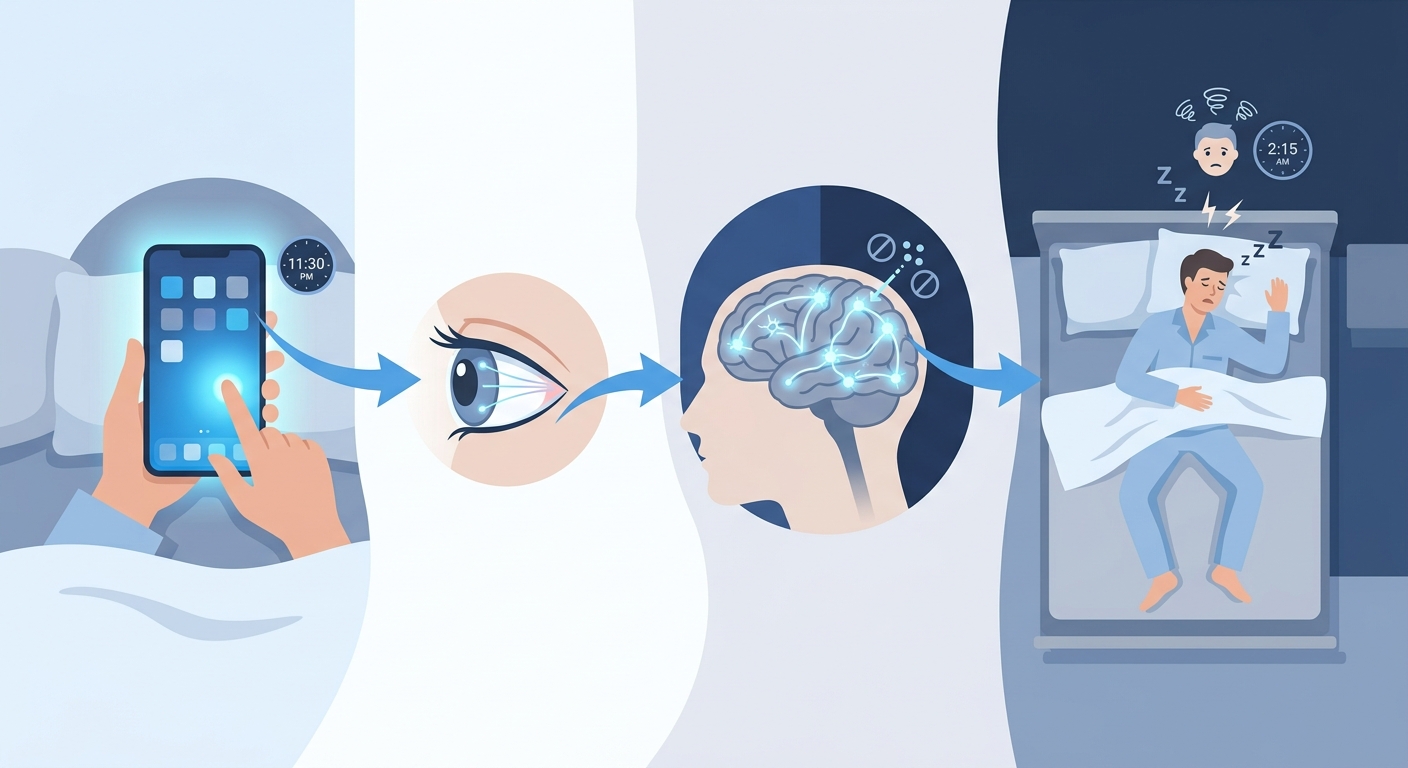
スクリーンタイムと睡眠アウトカムの関係を調べた大規模なメタ解析(He X et al., 2025, Frontiers in Psychiatry、11コホート研究・4万8,560人)では、1日のスクリーンタイムが1時間増えるごとに就寝時刻が平均13.2分遅れ、入眠困難のリスクがオッズ比3.05(95%CI: 1.51〜6.24)に上昇することが報告されています[3]。また、睡眠時間は1時間のスクリーンタイム増加に対して約3〜5分短縮する傾向が示されました。
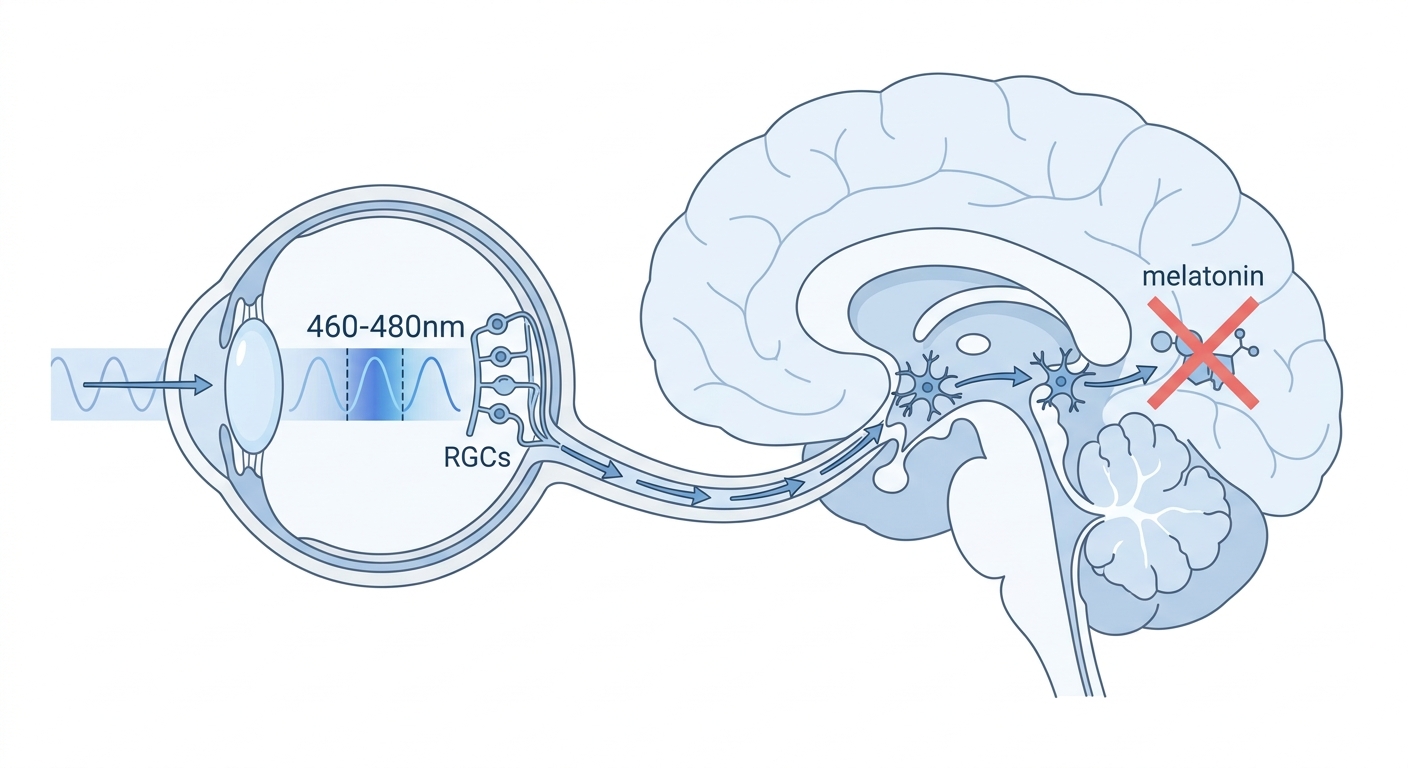
West KE, Jablonski MR, Warfield B, Cecil KS, James M, Ayers MA, Maida J, Brainard GC ら(2011)「Blue light from light-emitting diodes elicits a dose-dependent suppression of melatonin in humans」Journal of Applied Physiology (1985) 110(3):619-26. PubMed ― 本記事での引用箇所:ブルーライト(469nm)の用量依存的メラトニン抑制(ED50 = 14.19 μW/cm²)の根拠
Hanifin JP, Lockley SW, Cecil K, West K, Jablonski M, Warfield B, James M, Ayers M, Byrne B, Gerner E, Pineda C, Rollag M, Brainard GC(2019)「Randomized trial of polychromatic blue-enriched light for circadian phase shifting, melatonin suppression, and alerting responses」Physiology & Behavior 198:57-66. PubMed ― 本記事での引用箇所:青色豊富光が標準光と比べてメラトニン抑制率70.9%対42.8%という比較データの根拠
He X, Pan B, Ma N, Li D, Kong W, Liu Q, Liu X, Wang X, Deng X, Yang K(2025)「The association of screen time and the risk of sleep outcomes: a systematic review and meta-analysis」Frontiers in Psychiatry. PMID: 41480345. PMC ― 本記事での引用箇所:スクリーンタイム1時間増加につき入眠困難リスクOR=3.05、就寝遅延13.2分の根拠
Schmid SR, Höhn C, Bothe K, Plamberger CP, Angerer M, Pletzer B, Hoedlmoser K(2021)「How Smart Is It to Go to Bed with the Phone? The Impact of Short-Wavelength Light and Affective States on Sleep and Circadian Rhythms」Clocks & Sleep 3(4):558-580. PMC ― 本記事での引用箇所:就寝前スマートフォン使用による徐波睡眠減少・コルチゾール覚醒反応低下・メラトニン増加抑制の根拠
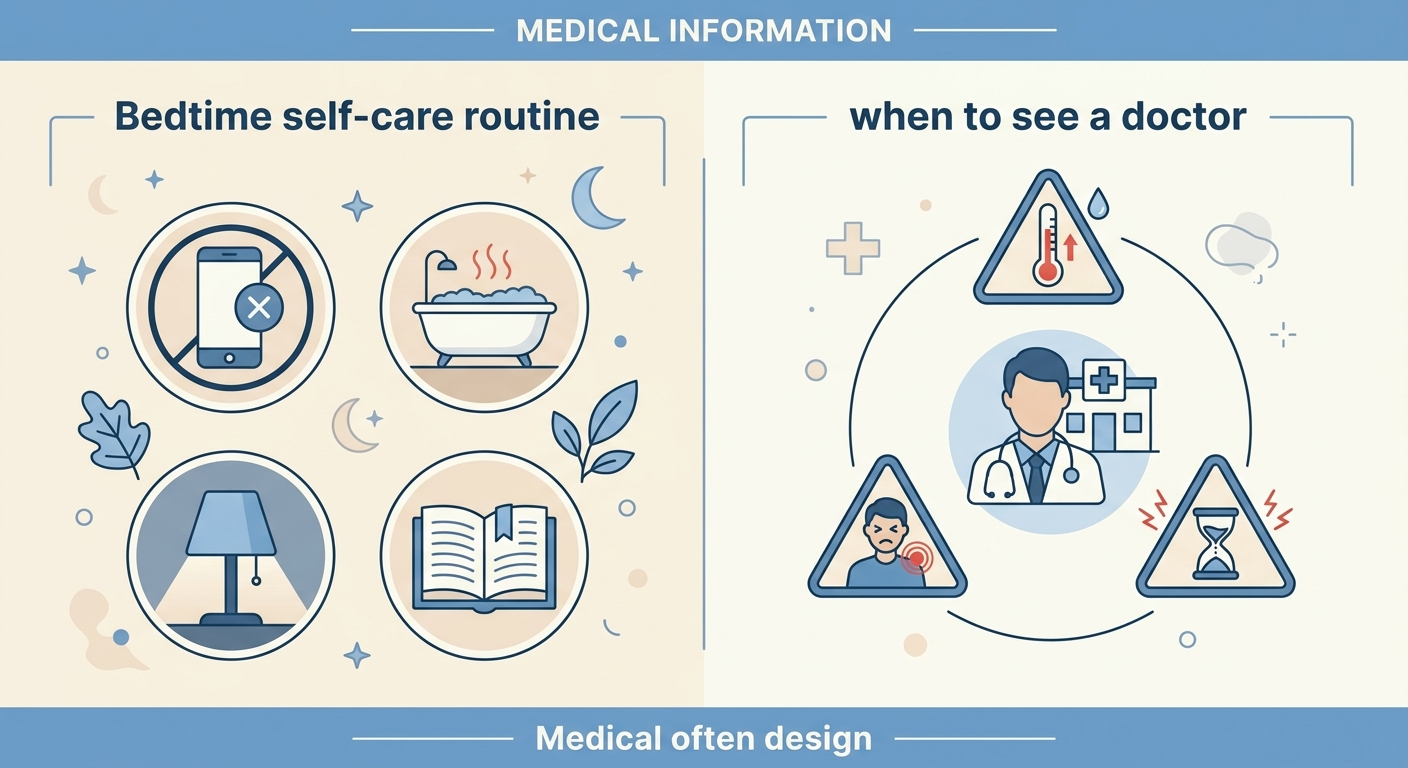
Haghayegh S, Khoshnevis S, Smolensky MH, Diller KR, Castriotta RJ(2019)「Before-bedtime passive body heating by warm shower or bath to improve sleep: A systematic review and meta-analysis」Sleep Medicine Reviews 46:124-135. ScienceDirect ― 本記事での引用箇所:就寝1〜2時間前の40〜42.5℃入浴で入眠潜時平均36%短縮という根拠(17研究のメタ解析)