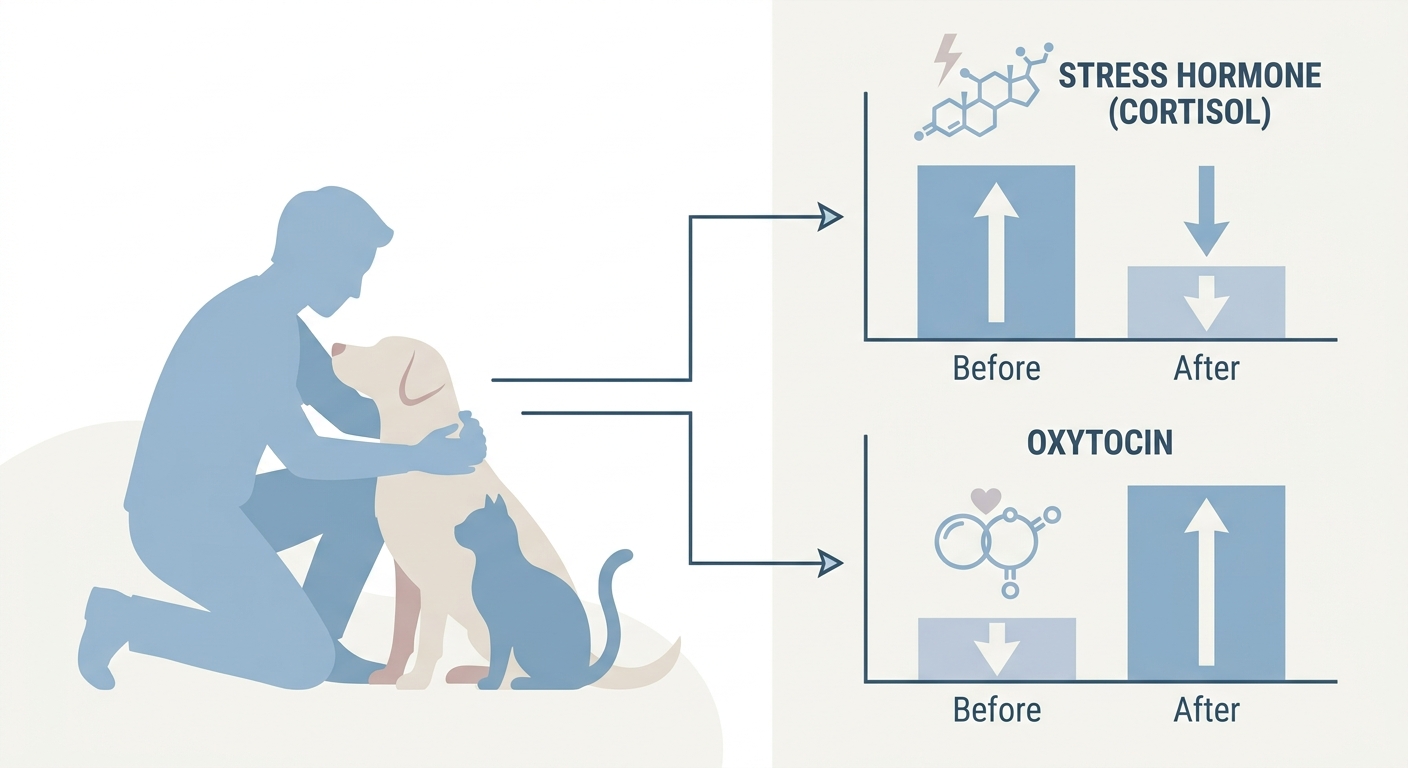
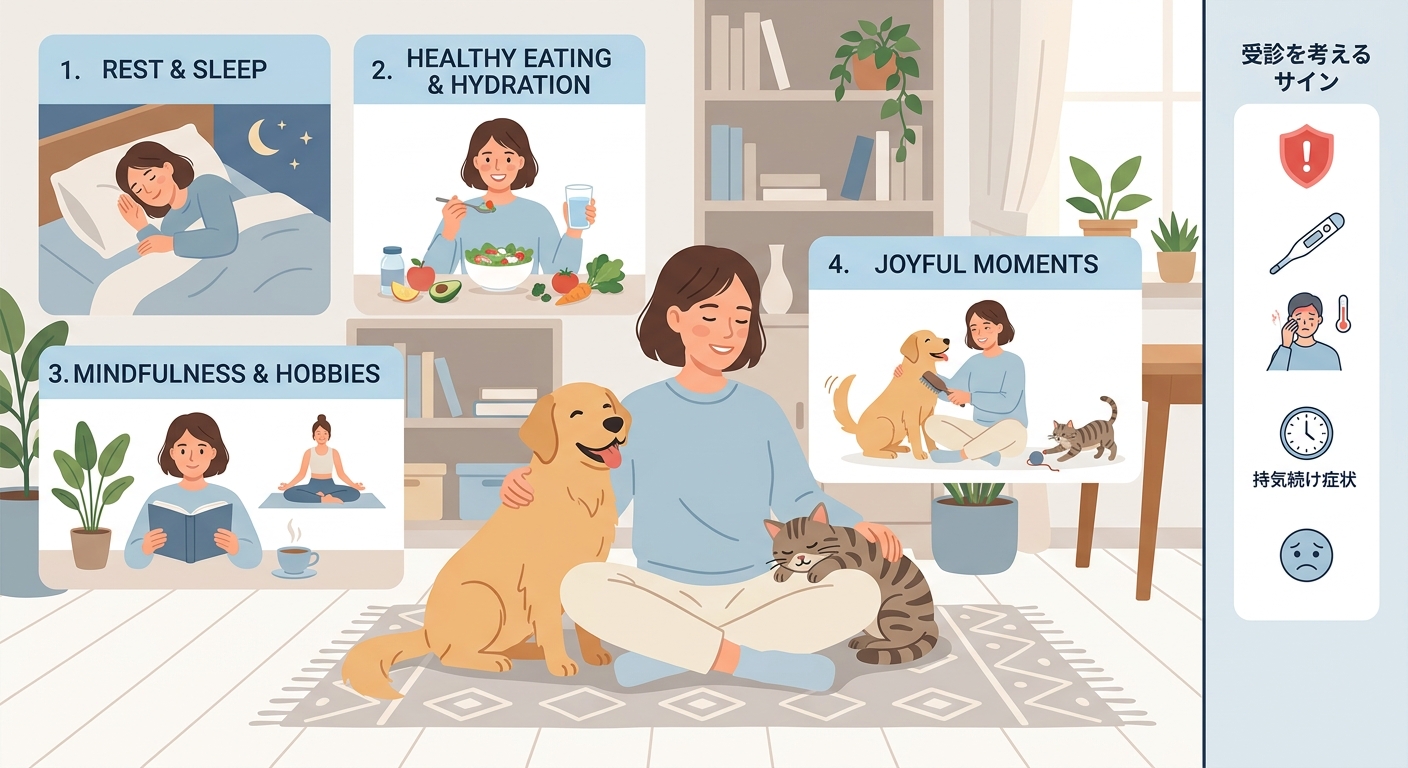
タイ・チェンマイ大学の研究チームが 2025年に PLOS ONE に発表した論文では、大学生64名を対象に犬との15分間の交流前後で唾液コルチゾールを測定しました[2]。その結果、交流後のコルチゾール濃度は交流前に比べて約16%低下し(p=0.0406)、自己報告ストレススコアも33.5%の低下が確認されています(p=0.0017)。また脈拍数も有意に減少しており、交感神経の活動が落ち着いた状態への移行が示唆されると研究者らは述べています。
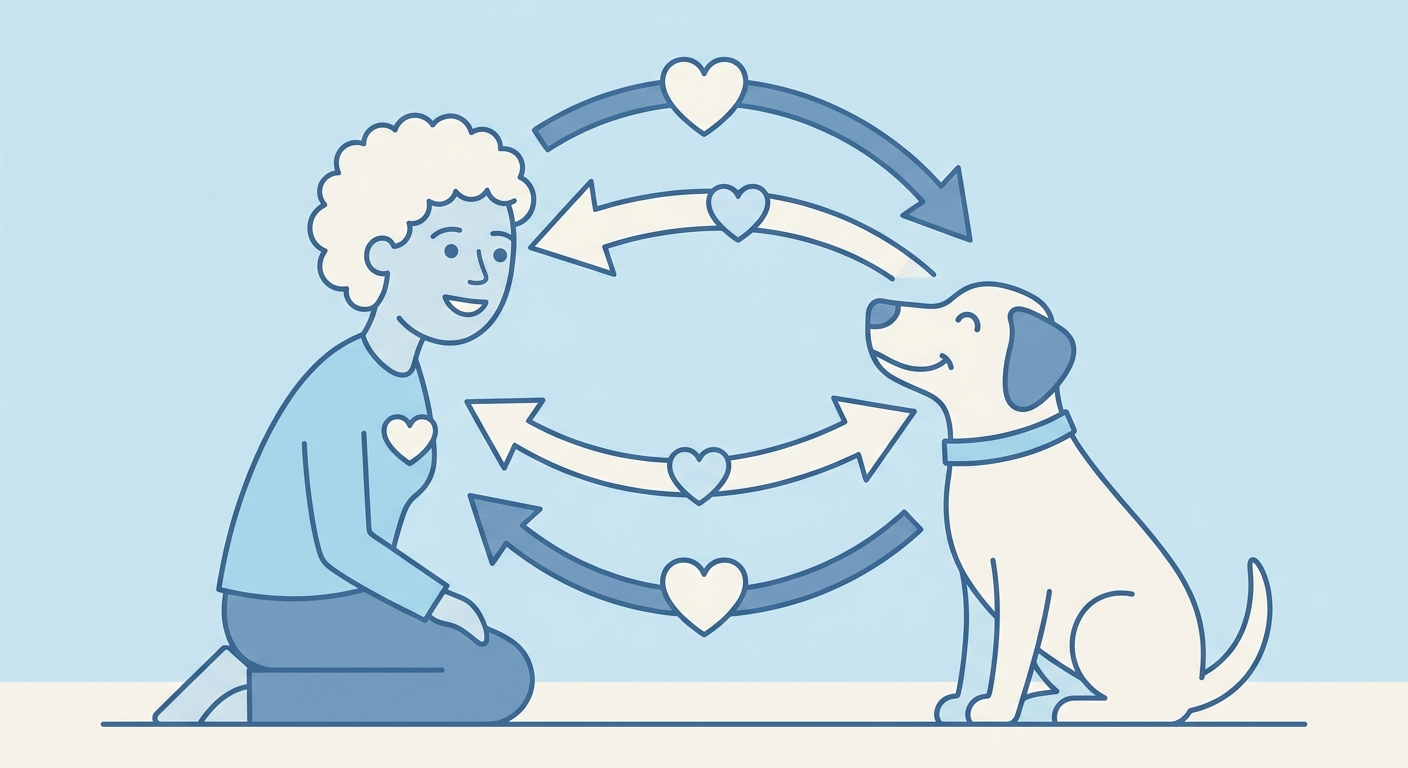
Nagasawa M, Mitsui S, En S, et al.(2015)「Social evolution. Oxytocin-gaze positive loop and the coevolution of human-dog bonds」Science 348(6232):333-6. PubMed PMID: 25883356 ― 本記事での引用箇所:「犬と飼い主の相互注視によるオキシトシン正フィードバックループ」の根拠(h2-1)
Yotanyamaneewong S, Junla D, Brown JL, et al.(2025)「The impact of canine-assisted intervention on stress reduction among university students in Thailand」PLoS ONE. PMC11902293 ― 本記事での引用箇所:「15分間の犬との交流で自己報告ストレス33.5%低下、唾液コルチゾール約16%低下」の根拠(h2-2)
Petersson M, Uvnäs-Moberg K, Nilsson A, et al.(2017)「Oxytocin and Cortisol Levels in Dog Owners and Their Dogs Are Associated with Behavioral Patterns: An Exploratory Study」Frontiers in Psychology. PubMed PMID: 29081760 ― 本記事での引用箇所:「飼い主と犬のオキシトシン・コルチゾールが行動パターンと連動」の根拠(h2-2)
Nagasawa T, Kimura Y, Masuda K, Uchiyama H.(2023)「Effects of Interactions with Cats in Domestic Environment on the Psychological and Physiological State of Their Owners: Associations among Cortisol, Oxytocin, Heart Rate Variability, and Emotions」Animals (Basel) 13(13):2116. PMC10340037 ― 本記事での引用箇所:「猫との交流中に心拍増加・副交感神経低下(ユーストレス反応)、交流後に感情的覚醒が低下(p=0.013)」の根拠(h2-2、h2-3)
Johnson EA, Portillo A, Bennett NE, Gray PB.(2021)「Exploring women's oxytocin responses to interactions with their pet cats」PeerJ. PMC8592048 ― 本記事での引用箇所:「猫が自発的に参加する交流でオキシトシン増加との正の相関がみられた」の根拠(h2-3)