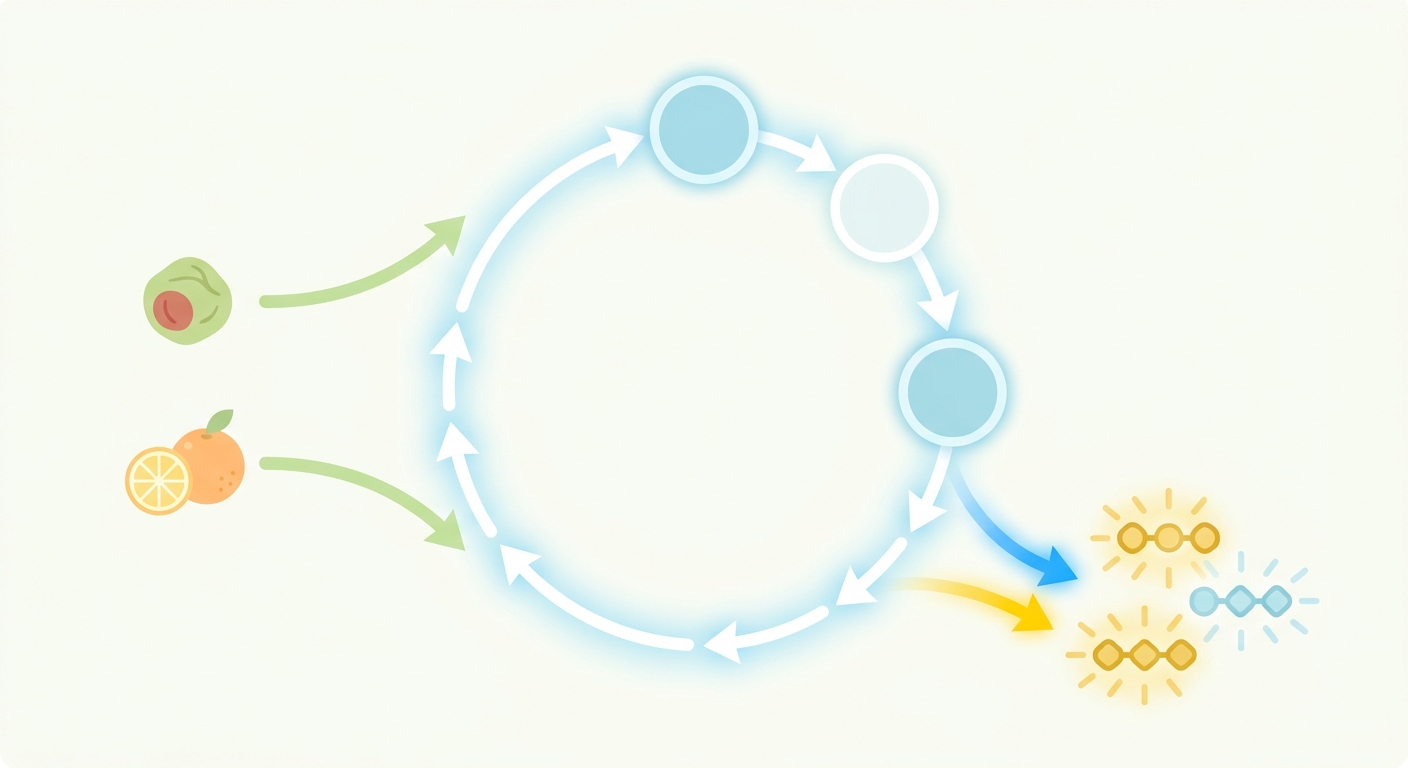
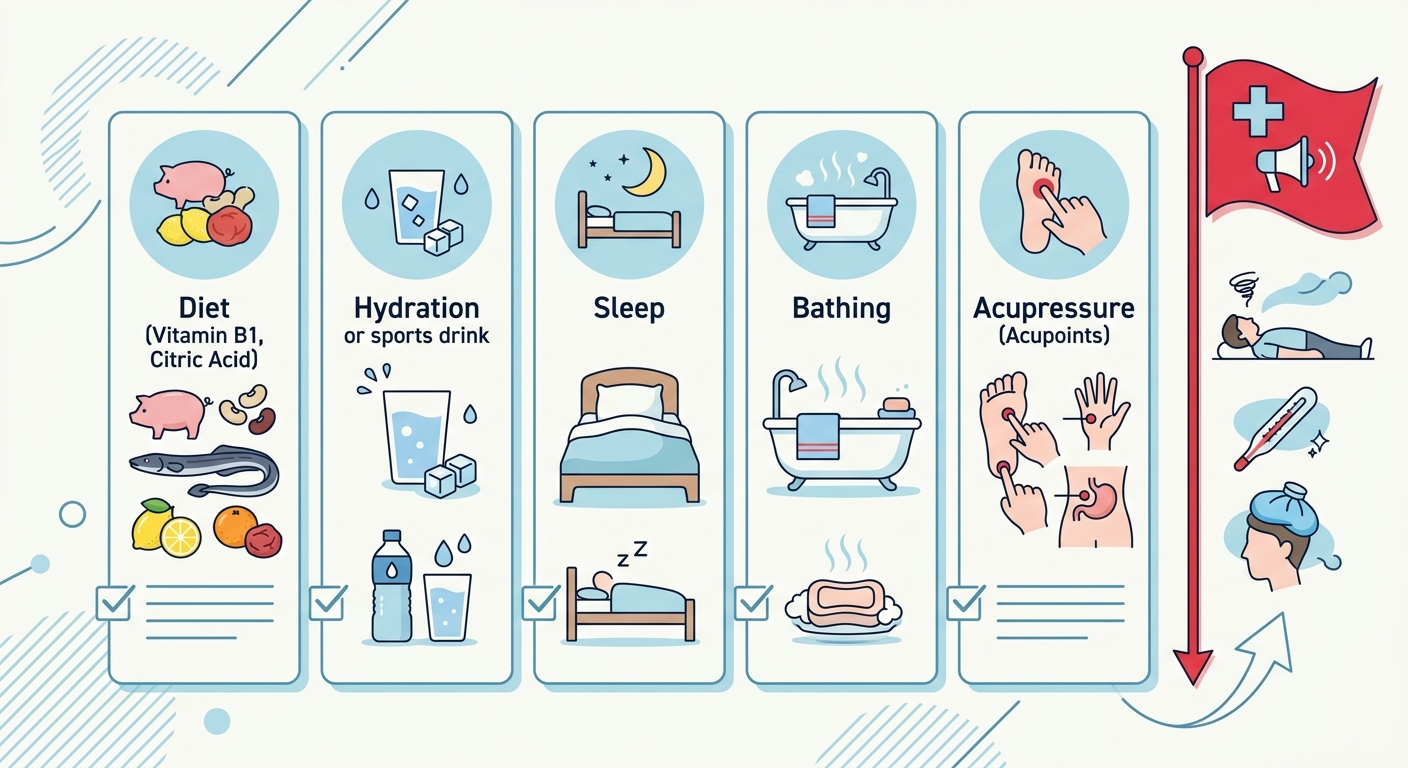
ラットを用いた研究(Hara et al., 2021)では、クエン酸投与後に血漿中のクエン酸・シス-アコニテート・イソクエン酸濃度が有意に上昇し(いずれもP<0.001)、TCAサイクルの初期代謝物が増加することが報告されています[4]。
ヒトを対象とした二重盲検クロスオーバー試験(Sugino et al., 2007)では、健康なボランティア18名(男女各9名)に対してクエン酸(2,700mg/日)を8日間投与したところ、視覚的アナログスケール(VAS)による疲労スコアがプラセボ群の74.6から60.6へ有意に低下し(p<0.01)、唾液クロモグラニンA値(ストレスバイオマーカー)も有意に改善したと報告されています[5]。
Romanovsky AA(2018)「Regulation of Body Temperature by Autonomic and Behavioral Thermoeffectors」Handb Clin Neurol. 156:3-12. PubMed 30632999 ― 本記事での引用箇所:「自律神経が深部体温を37°Cに維持する仕組み(体温調節と交感神経・副交感神経)」の根拠
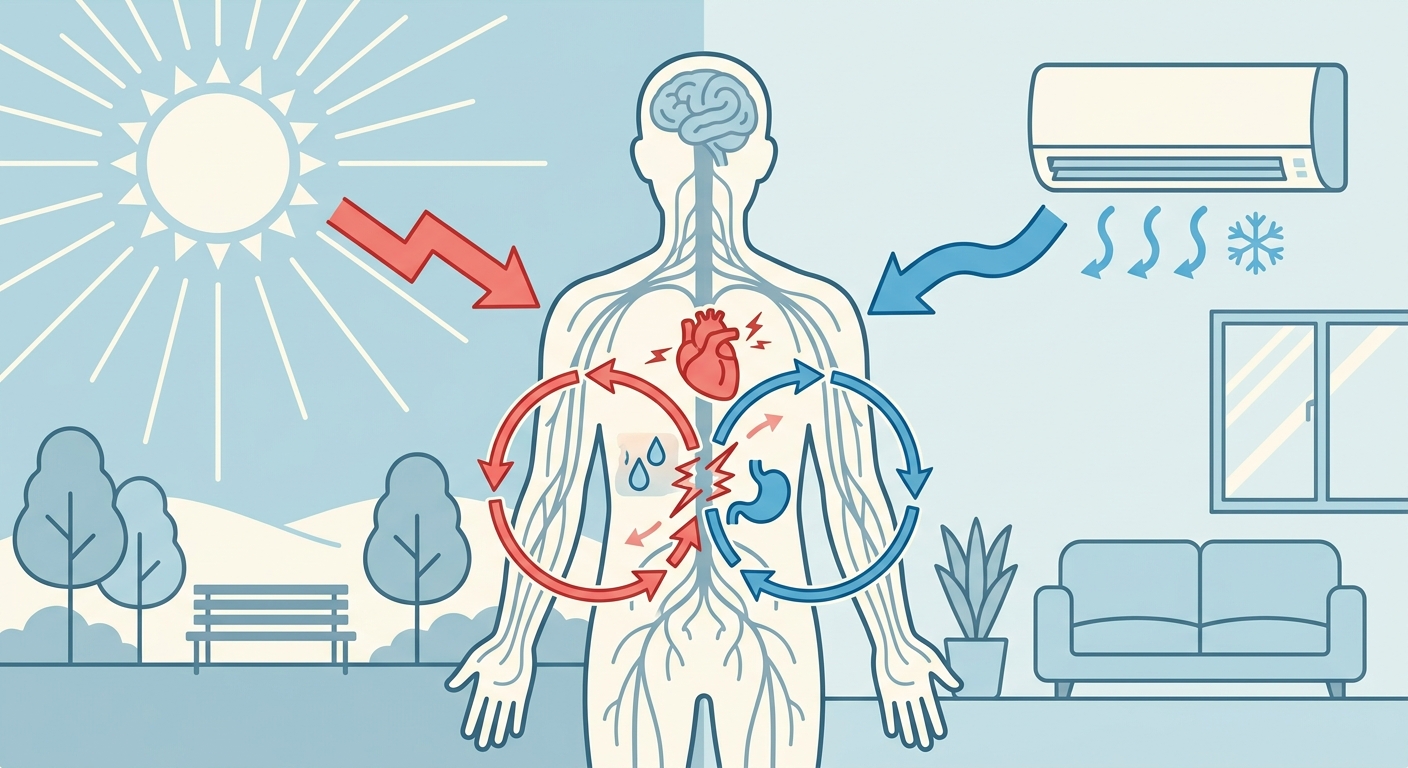
Yamamoto S, Iwamoto M, Inoue M, Harada N(2007)「Evaluation of the effect of heat exposure on the autonomic nervous system by heart rate variability and urinary catecholamines」J Occup Health. 49(3):199-207. PubMed 17575400 ― 本記事での引用箇所:「WBGT35°C暴露によりHF%低下・LF/HF比上昇・尿中ノルエピネフリン増加が有意差ありで報告」の根拠
Hiffler L, Rakotoambinina B(2023)「Thiamine deficiency: a commonly unrecognised but easily treatable condition」BMC Nutr. 9(1):67. PMC10398819;および Consolazio CF ら(NCBI Bookshelf NBK236216)「The Effect of Exercise and Heat on Vitamin Requirements」Nutritional Needs in Hot Environments. NCBI Bookshelf ― 本記事での引用箇所:「ビタミンB1の役割(糖質代謝)・汗による損失(約10µg/100ml)・精製炭水化物食で不足しやすい理由」の根拠
Hara Y, Kume S, Kataoka Y, Watanabe N(2021)「Changes in TCA cycle and TCA cycle-related metabolites in plasma upon citric acid administration in rats」Heliyon. 7(12):e08501. PMC8654791 ― 本記事での引用箇所:「クエン酸投与後にクエン酸・cis-アコニテート・イソクエン酸が血漿中で有意上昇(P<0.001)」の根拠
Sugino T, Aoyagi S, Shirai T, Kajimoto Y, Kajimoto O(2007)「Effects of Citric Acid and l-Carnitine on Physical Fatigue」J Clin Biochem Nutr. 41(3):224-30. PMC2243251 ― 本記事での引用箇所:「クエン酸2,700mg/日×8日でVAS疲労スコアが74.6→60.6に有意低下(p<0.01)、クロモグラニンA値も改善」の根拠
Montain SJ, Cheuvront SN, Lukaski HC(2007)「Sweat mineral-element responses during 7h of exercise-heat stress」Int J Sport Nutr Exerc Metab. 17(6):574-582. および「Electrolyte Losses and Replacement During Exercise」Human Kinetics. Human Kinetics ― 本記事での引用箇所:「汗中ナトリウム平均35mmol/L・カリウム平均5mmol/Lという電解質組成」の根拠
Zick SM ら(2024)「The Effect of Acupressure on Fatigue in Cancer Patients: A Meta-analysis Study」PMC. PMC11021070 ― 本記事での引用箇所:「足三里・合谷・三陰交などツボへの刺激が疲労スコアを有意低下させる可能性(主にがん関連疲労の文脈)」の根拠