Christoph Weidacker et al. (2025)「Efficacy of cognitive behavioral therapy in treating repetitive negative thinking, rumination, and worry – a transdiagnostic meta-analysis」Psychological Medicine / PMC. PMC12017360 ― 本記事での引用箇所:反芻思考・心配が認知行動療法の重要な介入ターゲットであること、55件のRCT(4,970名)をまとめた統合効果量(g=−0.67)の根拠
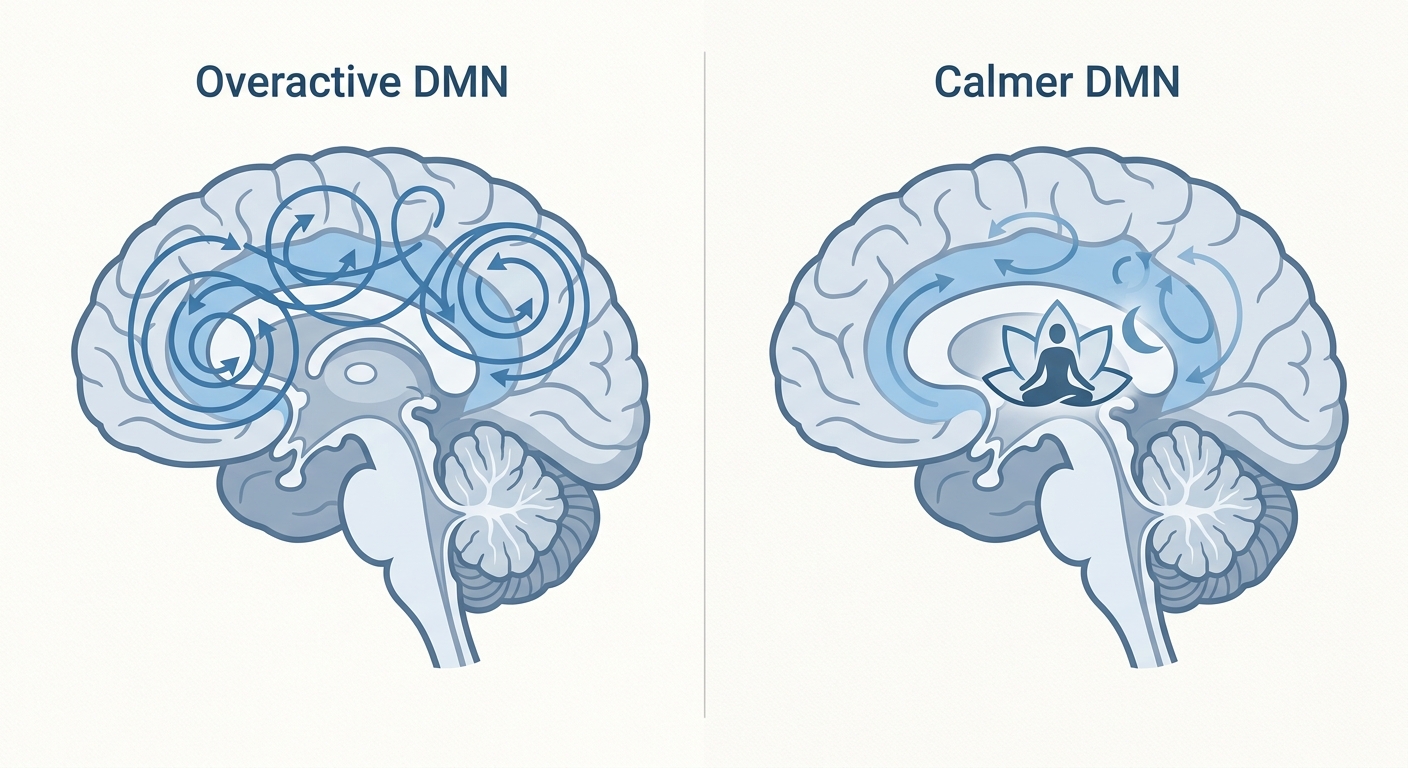
Nejati et al. (2020)「The subsystem mechanism of default mode network underlying rumination – a reproducible neuroimaging study」NeuroImage. PMID 32711069 ― 本記事での引用箇所:反芻思考とDMN(特に背内側前頭前皮質)の関連を14本のfMRIメタ解析で示した根拠
Brewer JA et al. (2015)「Meditation leads to reduced default mode network activity beyond an active task」NeuroReport / PMC. PMC4529365 ― 本記事での引用箇所:経験豊富な瞑想実践者でDMN(前帯状皮質・楔前部)の活動が低下し、マインドワンダリングも少なかったという fMRI 研究の根拠
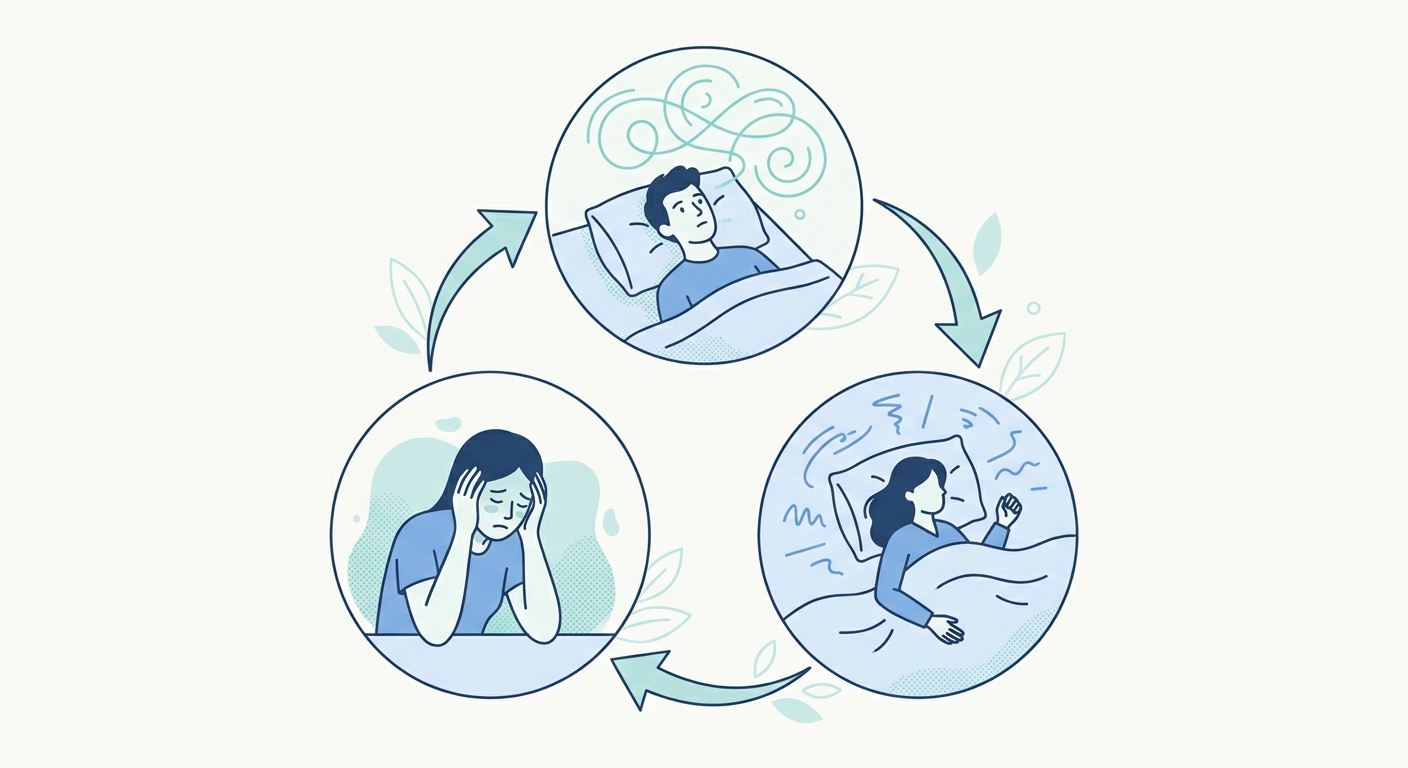
Drake CL et al. (2019)「Effects of Rumination and Worry on Sleep」Behavior Therapy. PMID 31030873 ― 本記事での引用箇所:178名の2週間日誌研究で、反芻・心配傾向が高い人ほどストレス→認知的覚醒→睡眠の質低下の経路が強くなるという根拠
Lancee J et al. (2017)「Sleep-related cognitive processes, arousal, and emotion dysregulation in insomnia disorder: the role of insomnia-specific rumination」Sleep Medicine. PMID 28215272 ― 本記事での引用箇所:不眠症68名の研究で反芻思考が特性的覚醒傾向と寝床前の状態的覚醒を媒介するという根拠(B=0.22, p<0.0001)
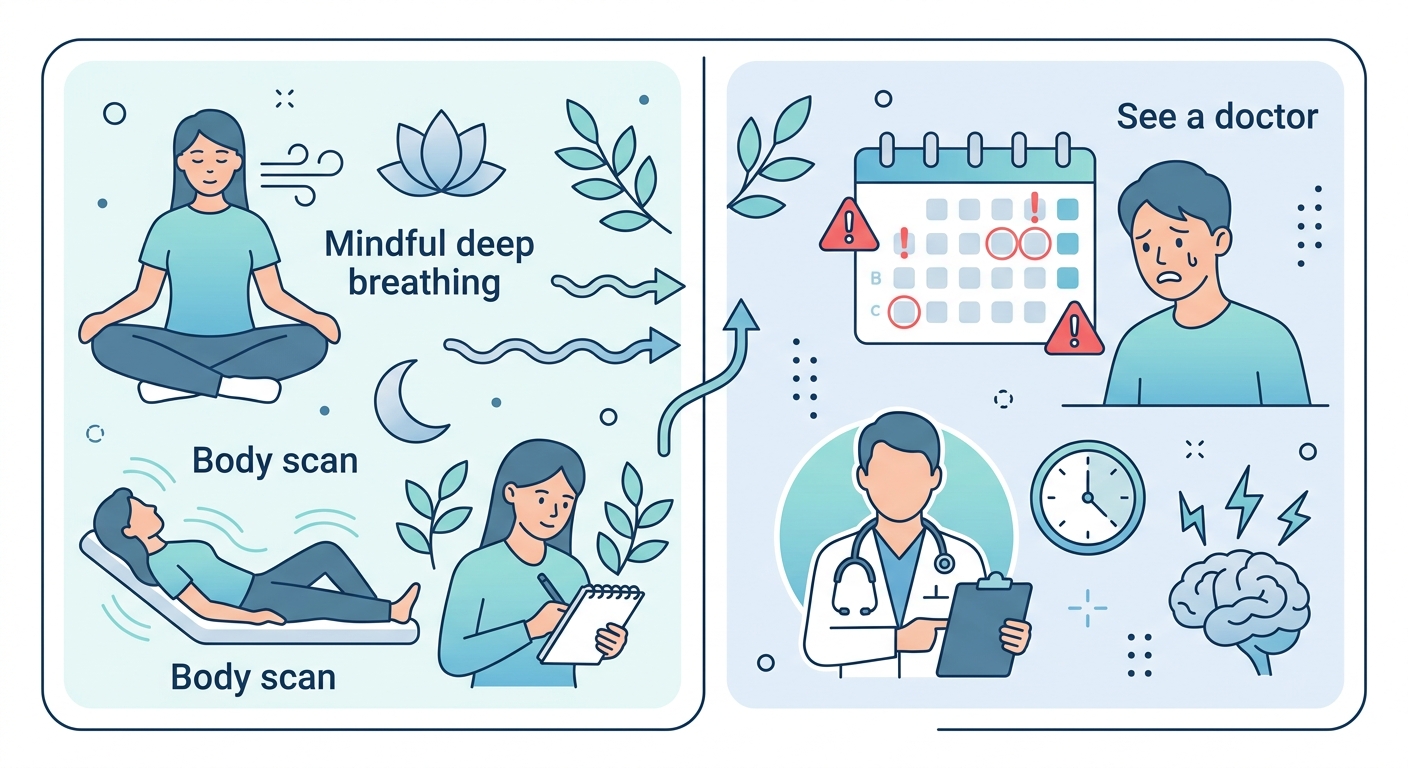
Feldman G et al. (2010)「Differential effects of mindful breathing, progressive muscle relaxation, and loving kindness meditation on decentering and negative reactions to repetitive thoughts」Behaviour Research and Therapy / PMC. PMC2932656 ― 本記事での引用箇所:190名のRCTで、マインドフルな呼吸が反芻的思考と感情反応の結びつきを弱めた根拠(r=.23 vs r=.63)