10件の前向きコホート研究(合計107,000人超)を解析したメタ解析(Diabetes Care, 2010年)によると、1日の睡眠が5〜6時間以下の「短時間睡眠」では2型糖尿病の発症リスクが28%高く、8〜9時間超の「長時間睡眠」では48%高いことが報告されています[3]。さらに入眠困難(眠れない)のある人では57%、中途覚醒(夜中に目が覚める)がある人では84%のリスク上昇が示されました。
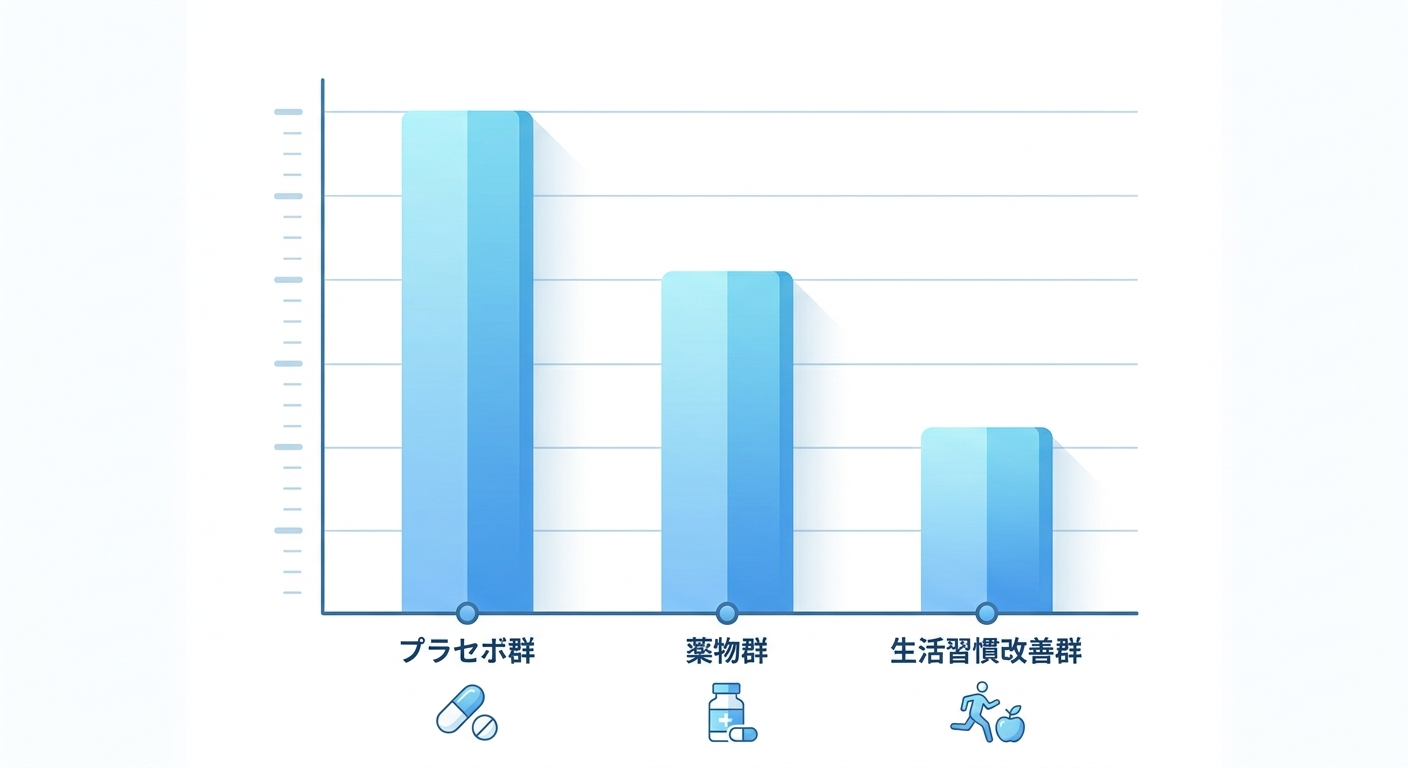
Knowler WC et al.(2002)「Reduction in the incidence of type 2 diabetes with lifestyle intervention or metformin」New England Journal of Medicine. PubMed PMID: 11832527 ― 本記事での引用箇所:生活習慣介入(週150分身体活動+体重7%減少目標)により糖尿病発症リスクが58%低下したデータ(発症率:介入群4.8件 vs プラセボ群11.0件/100人年)
Cappuccio FP et al.(2010)「Quantity and quality of sleep and incidence of type 2 diabetes: a systematic review and meta-analysis」Diabetes Care. PubMed PMID: 19910503 ― 本記事での引用箇所:短時間睡眠(≤5-6h)で2型糖尿病リスクが28%上昇、入眠困難で57%上昇、中途覚醒で84%上昇というデータ
Estruch R et al.(2013)「Primary Prevention of Cardiovascular Disease with a Mediterranean Diet」New England Journal of Medicine. PubMed PMID: 23432189 ― 本記事での引用箇所:地中海食+オリーブオイル群で心血管イベントリスクがハザード比0.70(30%低下)、地中海食+ナッツ群でハザード比0.72(28%低下)という報告(7,447名・追跡期間4.8年)
Huang L et al.(2020)「Effect of dose and duration of reduction in dietary sodium on blood pressure levels: systematic review and meta-analysis of randomised trials」BMJ. BMJ 2020;368:m315 ― 本記事での引用箇所:ナトリウム50mmol削減ごとに収縮期血圧が1.10mmHg低下、平均介入で収縮期血圧-4.26mmHg・拡張期血圧-2.07mmHgという用量反応データ(133試験・12,197名)
Abaraogu UO et al.(2024)「The Effectiveness of Exercise in Reducing Cardiovascular Risk Factors Among Adults: A Systematic Review and Meta-Analysis」Healthcare (PMC). PMC11460131 ― 本記事での引用箇所:定期的な運動が収縮期血圧を-3.32mmHg、拡張期血圧を-2.99mmHg低下させ、BMIを-1.28 kg/m²減少させるというデータ