自律神経の安定には、定期的な有酸素運動が有効とされています。片頭痛患者を対象にした無作為化比較試験(Varkey et al., 2011)では、40分間の有酸素運動を週3回行うことで、片頭痛日数が月に約1.2日減少したと報告されています[6]。また、21の臨床試験を統合した系統的レビューでは、中程度強度の有酸素運動によって月間片頭痛日数が平均2.18日減少したとされています[7]。
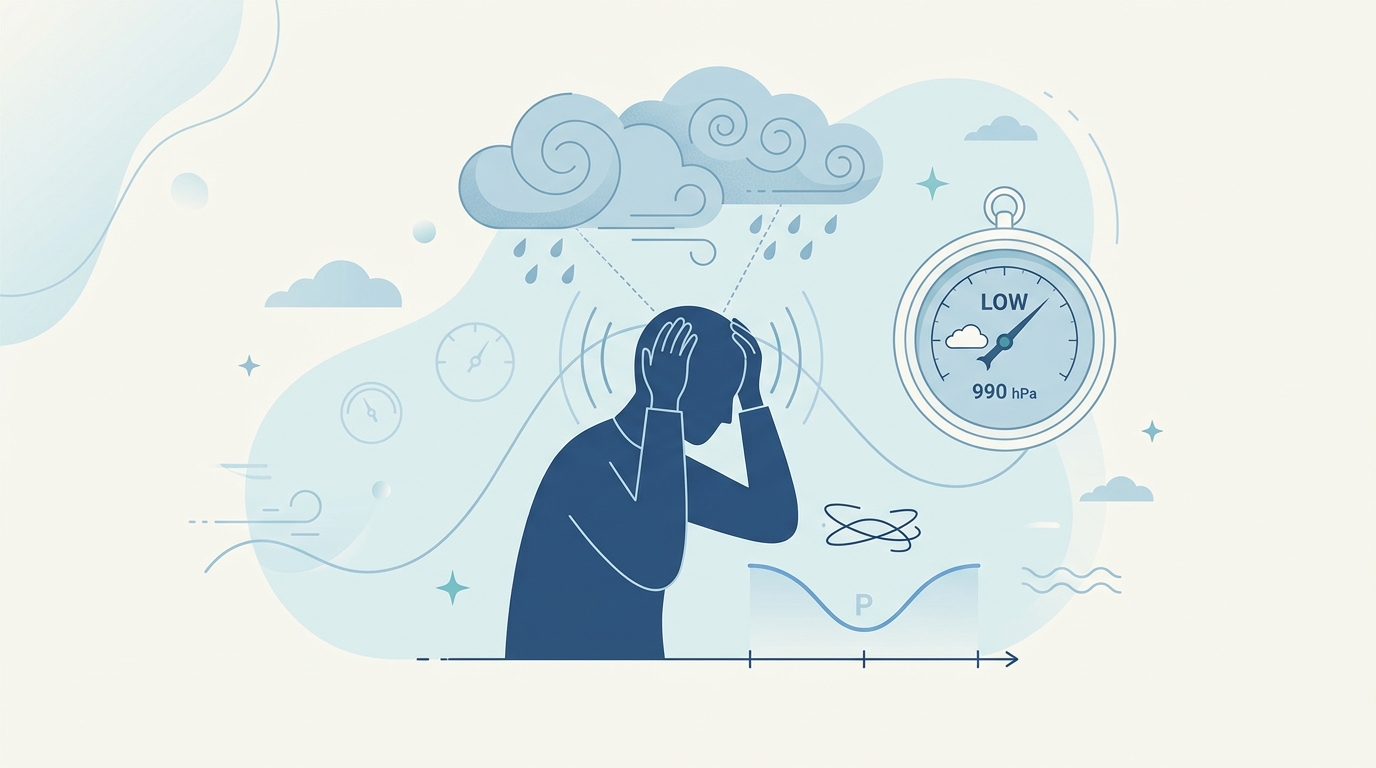
Okuma H, Okuma Y, Kitagawa Y(2015)「Examination of fluctuations in atmospheric pressure related to migraine」SpringerPlus. PMC4684554 ― 本記事での引用箇所:気圧が6〜10hPa低下したときに片頭痛が起こりやすいこと、前兆あり片頭痛患者の72.7%・前兆なし75.0%が気圧低下に伴う頭痛を経験した統計
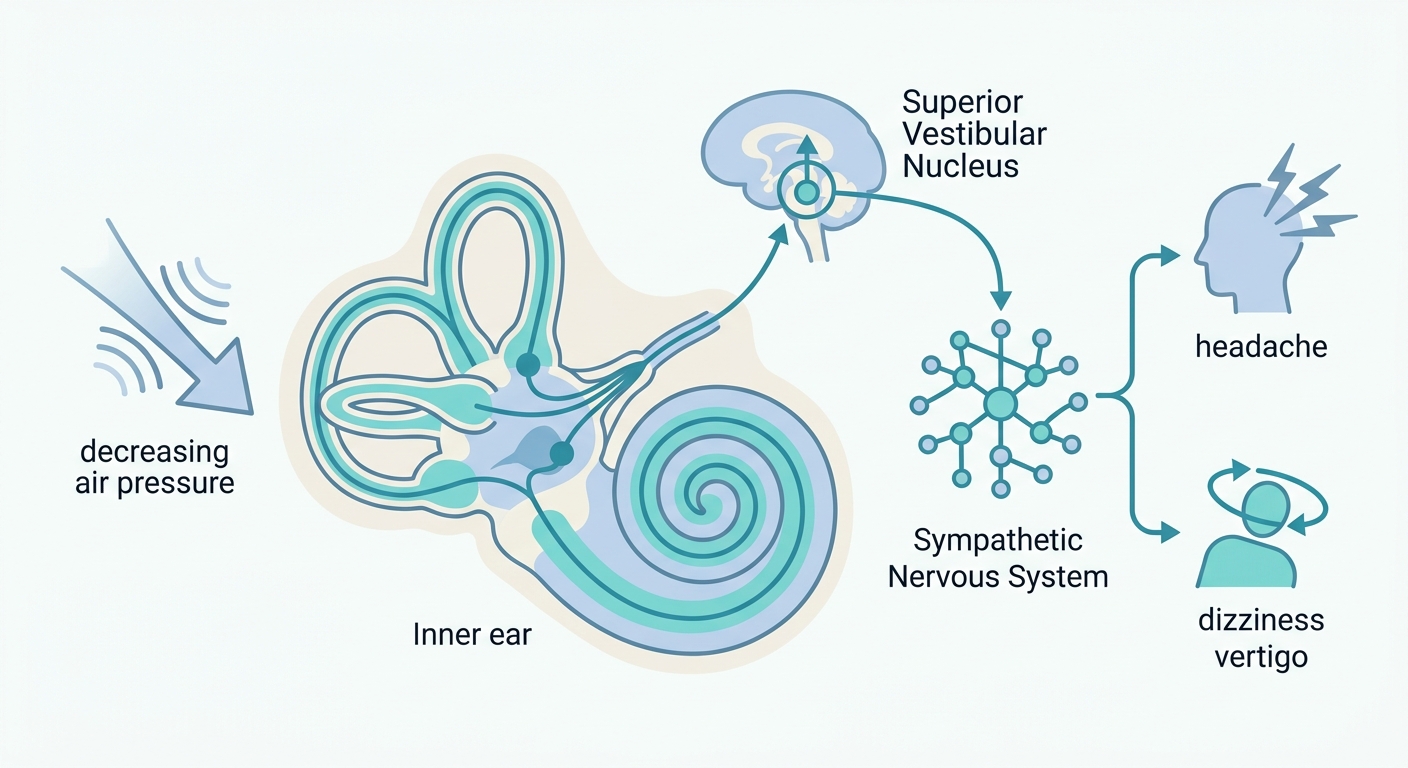
Sato J, Inagaki H, Kusui M, Yokosuka M, Ushida T(2019)「Lowering barometric pressure induces neuronal activation in the superior vestibular nucleus in mice」PLOS ONE. PLOS ONE ― 本記事での引用箇所:気圧40hPa低下が上前庭神経核のニューロン活動を増加させること、内耳を損傷するとこの反応が消失するという実験的証拠
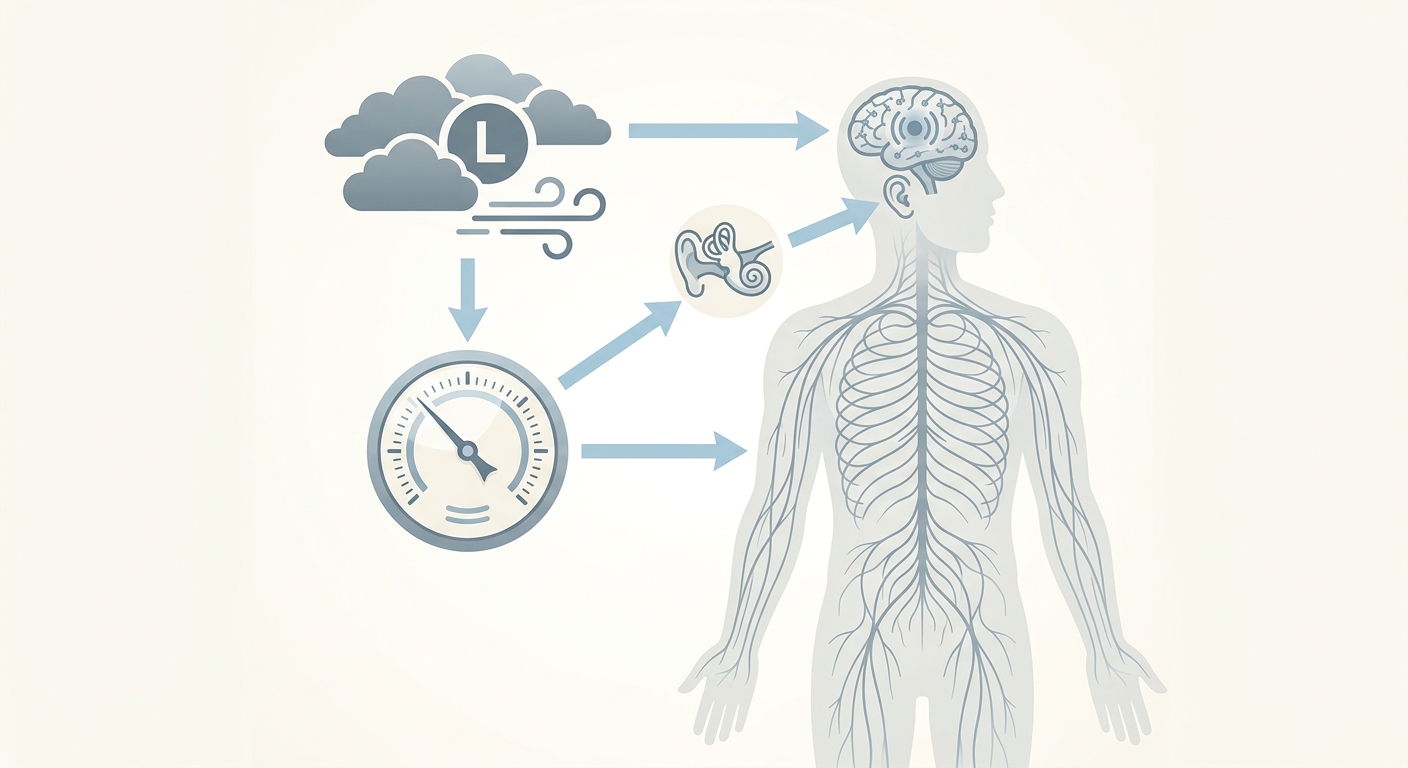
Kesserwani H(2021)「Migraine Triggers: An Overview of the Pharmacology, Biochemistry, Atmospherics, and Their Effects on Neural Networks」Cureus. PMC8088284 ― 本記事での引用箇所:気圧低下が交感神経を活性化させ血圧・心拍数の上昇を伴うこと、この効果が内耳損傷で消失すること
Katsuki M, Tatsumoto M, Kimoto K, et al.(2023)「Investigating the effects of weather on headache occurrence using a smartphone application and artificial intelligence: A retrospective observational cross-sectional study」Headache: The Journal of Head and Face Pain. PubMed 36853848 ― 本記事での引用箇所:頭痛発生の6時間前の気圧低下が最も強い関連を示すこと、深層学習モデルによる頭痛予測精度(R²=53.7%)
Farah A, Adam Y, Ahmed O, et al.(2025)「Impact of Barometric Pressure Changes on the Severity, Frequency, and Duration of Migraine Attacks: A Systematic Review of the Literature」Cureus. PMC12617017 ― 本記事での引用箇所:気圧変化と片頭痛頻度の関連は複数研究が支持するが重症度・持続時間との関連は一貫していないこと(2,696名を含む14研究の系統的レビュー)
Varkey E, Cider Å, Carlsson J, Linde M(2011)「Exercise as migraine prophylaxis: A randomized study using relaxation and topiramate as controls」Cephalalgia. PMC3236524 ― 本記事での引用箇所:40分間の有酸素運動を週3回行うことで片頭痛日数が月に約1.2日減少したという無作為化比較試験の結果
Woldeamanuel YW, Oliveira ABD(2022)「What is the efficacy of aerobic exercise versus strength training in the treatment of migraine? A systematic review and network meta-analysis of clinical trials」The Journal of Headache and Pain. PMC9563744 ― 本記事での引用箇所:21の臨床試験(1,195名)の統合解析で、中程度強度の有酸素運動が月間片頭痛日数を平均2.18日減少させたという知見